 UniReco Helping You Choose the Right Campus for Your Future
Related Articles


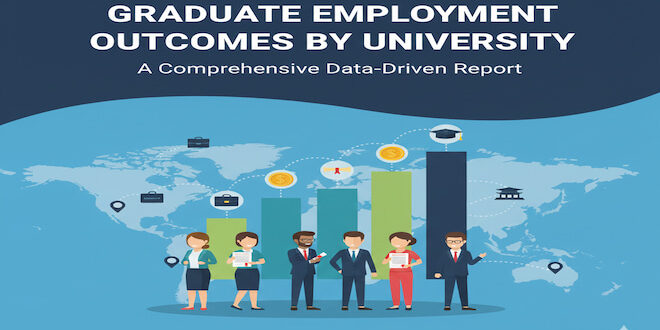
Graduate employment outcomes have become one of the most important factors students and parents consider when choosing a university. With rising tuition costs and increasing pressure to justify higher education as an investment, it’s natural to ask a practical question: What happens after graduation?
Universities often highlight employment statistics to show their value. At the same time, rankings, brochures, and websites can present these outcomes in ways that are confusing or incomplete. Numbers may look impressive, but without context, they can also be misleading.
This article explains graduate employment outcomes by university in a clear, research-backed way. It focuses on how employment data is collected, what it actually tells you, where its limits are, and how students and parents can use it responsibly when comparing universities. The goal is not to rank institutions, but to help families make informed, realistic decisions.
What Are Graduate Employment Outcomes?
Graduate employment outcomes describe what graduates are doing after completing their studies. These outcomes are usually measured within a fixed period, such as six months, one year, or three years after graduation.
Common indicators include:
- Employment rate
- Further study rate
- Average or median salary
- Type of employment (full-time, part-time, contract)
- Industry or occupation distribution
Some universities also report job relevance, meaning whether graduates work in roles related to their field of study.
While these metrics are useful, they only make sense when interpreted carefully.
Why Employment Outcomes Matter—but Not in Isolation
Employment outcomes provide insight into how graduates transition from university to work. Strong outcomes can suggest good preparation, industry connections, or labor market alignment.
However, outcomes alone do not tell the full story.
They do not fully capture:
- Job satisfaction
- Career growth over time
- Underemployment
- Geographic mobility
- Personal goals
A university with lower short-term employment rates may still offer strong long-term value, depending on the student and the field.
How Universities Collect Employment Data
Understanding how data is collected is essential for interpreting it correctly.
Graduate Surveys
Most employment outcomes come from graduate surveys. Universities contact recent graduates and ask about their current status.
Typical questions include:
- Are you employed, studying, or seeking work?
- What type of role are you in?
- Is your job related to your degree?
- What is your income range?
Response rates vary, and not all graduates respond.
Administrative and Government Data
In some countries, universities use government employment records or tax data to track graduate outcomes.
This method can provide more accurate employment and income data, but it may lack detail about job relevance or satisfaction.
Employer and Alumni Tracking
Some institutions supplement surveys with employer feedback or alumni tracking. These sources add context but are not always comprehensive.
Key Employment Metrics Explained
To compare graduate employment outcomes by university effectively, it helps to understand the most common metrics.
Employment Rate
The employment rate shows the percentage of graduates who are employed within a certain time frame.
Important considerations:
- Does “employed” include part-time or temporary work?
- Are graduates working by choice or necessity?
- How soon after graduation is this measured?
High employment rates look positive, but they do not guarantee quality or stability.
Further Study Rate
Some graduates choose to continue studying.
A high further study rate may indicate:
- Strong academic preparation
- Fields where graduate study is expected
- Limited immediate job opportunities
This metric should be viewed alongside employment data, not separately.
Salary Data
Salary figures attract attention, but they require caution.
Questions to ask:
- Is the figure an average or a median?
- How many graduates reported salary data?
- Are salaries adjusted for cost of living?
High salaries in expensive cities may not reflect higher real purchasing power.
Job Relevance
Job relevance measures whether graduates are working in roles related to their degree.
This metric is especially important for professionally oriented programs. However, relevance can be subjective and depends on how graduates interpret the question.
Why Employment Outcomes Vary by University
Graduate employment outcomes differ across universities for many reasons, not all of which reflect teaching quality.
Student Intake Profile
Universities that admit students with strong academic backgrounds may show better outcomes partly because of student characteristics, not institutional value added.
This does not mean outcomes are meaningless, but it does mean they reflect both input and output.
Program Mix
Universities with a high proportion of graduates in fields like engineering, healthcare, or business often show stronger employment outcomes than those focused on arts or humanities.
Comparisons should be made by program or discipline, not just by institution.
Location and Labor Market
Local job markets matter.
Universities located in major cities or economic hubs may show higher employment rates simply because more jobs are available nearby.
Regional universities may perform well in certain fields but have fewer local opportunities.
Industry Connections
Some universities have strong links with employers through internships, placements, or alumni networks. These connections can significantly influence early employment outcomes.
Comparing Employment Outcomes Across Universities
To make meaningful comparisons, students and parents should follow a structured approach.
Compare Similar Programs
Comparing overall university employment rates can be misleading.
Instead:
- Compare the same field across different universities
- Look at outcomes for specific programs
- Consider cohort size and specialization
A strong engineering program at one university may outperform another institution’s overall average.
Look at Trends, Not Just One Year
Single-year data can be influenced by economic cycles, pandemics, or reporting changes.
Multi-year trends provide a more reliable picture of consistency and resilience.
Consider Time Frames
Short-term outcomes capture immediate transitions. Long-term outcomes often reflect career growth.
If available, look for data at multiple points after graduation.
The Role of Rankings and League Tables
Many rankings include employment outcomes as part of their methodology.
While rankings can offer a broad overview, they often:
- Use simplified metrics
- Combine unrelated factors
- Mask differences between programs
Rankings should be starting points, not final decision tools.
Employment Outcomes and Career Flexibility
Not all degrees aim for immediate employment in a single profession.
Some programs emphasize transferable skills that support long-term flexibility rather than rapid placement.
Graduates from these programs may:
- Change industries more often
- Take longer to settle into a career path
- Achieve strong outcomes later rather than immediately
Short-term employment data may undervalue these pathways.
The Impact of Internships and Work Experience
Across universities, one factor consistently improves employment outcomes: experience.
Students who complete:
- Internships
- Cooperative education placements
- Industry projects
- Relevant part-time work
Tend to find employment faster, regardless of university reputation.
This suggests that outcomes reflect both institutional support and student engagement.
International Students and Employment Outcomes
Graduate employment outcomes can differ significantly for international students.
Factors include:
- Work visa restrictions
- Employer willingness to sponsor
- Language requirements
- Recognition of qualifications
When reviewing data, international students should check whether outcomes apply to domestic graduates only or include international cohorts.
What Employment Outcomes Do Not Show
Even detailed employment data has limits.
It rarely shows:
- Job satisfaction
- Work-life balance
- Career alignment with values
- Long-term fulfillment
A job obtained quickly is not always a good job.
How Parents and Students Should Use Employment Data
Employment outcomes should inform decisions, not dominate them.
A balanced approach includes:
- Reviewing outcomes by program
- Understanding local labor markets
- Considering costs and debt
- Evaluating teaching quality and support
- Reflecting on personal goals
Used wisely, employment data reduces uncertainty. Used blindly, it can mislead.
Common Misinterpretations to Avoid
Several mistakes appear often.
These include:
- Assuming higher employment rates mean better education
- Comparing unrelated fields
- Ignoring response rates and methodology
- Treating averages as guarantees
- Overlooking individual effort
Awareness of these pitfalls leads to better decisions.
A Practical Framework for Evaluating Graduate Employment Outcomes
When comparing universities, ask:
- What percentage of graduates are employed, and in what roles?
- How soon after graduation are outcomes measured?
- Are results broken down by program?
- How large is the graduate sample?
- How do outcomes align with my goals?
Writing down answers often reveals which data points truly matter.
Employment Outcomes and Long-Term Perspective
Careers unfold over decades, not months.
Early employment outcomes are important, but they do not define lifetime success. Adaptability, continuous learning, and professional growth often matter more than first-job placement.
Universities that foster these qualities may not always top short-term employment charts, but they can still provide strong long-term value.
Final Thoughts
Graduate employment outcomes by university are powerful tools when used carefully. They offer insight into how education connects to work, but they are not absolute measures of quality or success.
Students and parents who understand how outcomes are measured, what influences them, and where their limits lie are better equipped to make informed choices.
The best university is not simply the one with the highest employment rate. It is the one that prepares students for sustainable careers, meaningful work, and long-term adaptability in a changing world.
