 UniReco Helping You Choose the Right Campus for Your Future

Related Articles

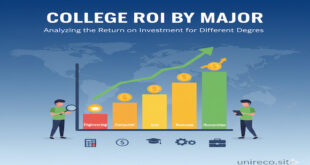

How to Evaluate Whether a Degree Is Worth the Cost
valuating return on investment.
Tuition Fees
Tuition varies widely by country, institution, and program. Professional degrees such as medicine, law, or engineering often cost more than arts or social science programs.
It is also important to distinguish between:
- Sticker price (listed tuition)
- Net cost (after scholarships or financial aid)
The net cost is what matters for ROI calculations.
Living Expenses
Living costs can sometimes exceed tuition, especially in major cities.
These include:
- Housing
- Food
- Transportation
- Utilities
- Health insurance
- Personal expenses
A lower-tuition program in a high-cost city may be more expensive overall than a higher-tuition program in a lower-cost area.
Opportunity Cost
Opportunity cost refers to income you could have earned if you were working instead of studying.
For example, a four-year degree represents four years of potential full-time earnings. This does not mean the degree is not worth it, but the time factor should be acknowledged.
Debt and Interest
Student loans increase the total cost of a degree.
Interest rates, repayment terms, and repayment duration all affect long-term ROI. A degree that looks affordable upfront may become expensive over time if loan terms are unfavorable.
The Return Side of the Equation
Returns from a university degree extend beyond the first job after graduation.
Starting Salary vs Long-Term Earnings
Many degrees have modest starting salaries but strong long-term growth. Others offer high initial pay that plateaus quickly.
For example:
- Technical and professional degrees often offer higher starting salaries
- Some humanities and social science graduates experience slower early growth but broader career options later
Evaluating ROI means looking at earning trajectories, not just first-year income.
Employment Stability
Job stability plays a major role in real-world returns.
Degrees linked to fields with consistent demand often provide:
- Lower unemployment risk
- Faster re-employment after job loss
- Greater geographic flexibility
Periods of unemployment can significantly reduce lifetime earnings, even for high-paying fields.
Access to Certain Careers
Some professions require specific degrees or credentials. Without them, entry is impossible regardless of talent.
In these cases, ROI cannot be measured only by salary comparison. The degree is the gateway to the profession itself.
Career Flexibility
Flexibility has value, even if it is difficult to quantify.
Degrees that build transferable skills—such as communication, analysis, and problem-solving—may allow graduates to shift industries more easily over time. This adaptability can protect ROI when job markets change.
Differences in ROI by Field of Study
While individual outcomes vary, research consistently shows patterns across fields.
STEM and Technical Fields
Degrees in science, technology, engineering, and mathematics often show strong financial returns.
Typical characteristics include:
- Higher average starting salaries
- Clear skill-to-job pathways
- Strong demand in many economies
However, these programs can be academically demanding, and not all students find them suitable.
Business and Economics
Business-related degrees often offer moderate to strong ROI, especially when combined with internships or practical experience.
Outcomes vary widely based on specialization, institution quality, and networking.
Health and Professional Degrees
Healthcare and licensed professions often have high ROI over time.
These programs can be expensive and lengthy, but they often lead to stable employment and predictable income growth.
Arts, Humanities, and Social Sciences
These fields tend to show lower average financial ROI when measured purely by income.
However, they often provide:
- Broad skill sets
- Access to diverse career paths
- Strong foundation for graduate study
For students who combine these degrees with practical experience, the long-term ROI can be higher than averages suggest.
The Role of Institution and Program Quality
Not all degrees in the same field offer the same return.
Program quality affects:
- Skill relevance
- Employer recognition
- Internship and placement opportunities
- Alumni networks
A well-designed program at a lesser-known institution may offer better ROI than a poorly structured program at a prestigious one.
Therefore, evaluating curriculum, teaching quality, and outcomes is more useful than focusing on reputation alone.
Geography and ROI
Where you study and work has a major impact on ROI.
Cost Differences
Tuition and living costs vary by country and city. These differences significantly affect total investment.
Salary Levels
Earnings vary by region. A degree that leads to high income in one country may not offer the same return elsewhere.
Immigration and Work Rights
For international students, post-study work rights influence ROI strongly. Limited work options can reduce returns, regardless of degree quality.
Scholarships and Financial Aid Impact on ROI
Scholarships can dramatically improve ROI by reducing upfront costs and debt.
Even partial scholarships can:
- Shorten repayment periods
- Reduce financial stress
- Increase net returns over time
When comparing programs, it is important to factor in confirmed financial aid, not just potential awards.
Non-Financial Returns That Still Matter
Although ROI focuses on financial outcomes, education also provides non-financial benefits.
These include:
- Personal development
- Social networks
- Confidence and independence
- Exposure to new ideas and cultures
While these factors do not appear in spreadsheets, they influence life satisfaction and long-term success.
Ignoring them entirely can lead to narrow and unsatisfying decisions.
Common Mistakes When Thinking About Degree ROI
Several common errors distort decision-making.
One mistake is focusing only on average salary data. Another is assuming that high-cost degrees are automatically better. Some families also underestimate debt impact or overestimate early-career income.
Avoiding these mistakes requires patience, research, and realistic expectations.
How Students and Parents Can Evaluate ROI Practically
Instead of searching for a single “best” degree, use a comparison-based approach.
Ask:
- What is the total cost of this degree?
- What are realistic employment outcomes?
- How stable is demand in this field?
- What are the long-term earning prospects?
- How flexible is the career path?
Writing down answers helps clarify trade-offs.
ROI Is Personal, Not Universal
A degree with strong financial ROI for one student may be a poor choice for another.
Factors such as interests, strengths, risk tolerance, and life goals matter. A student who enjoys their field and performs well often achieves better outcomes than someone who chooses purely for income.
Therefore, ROI should guide decisions, not dictate them.
Long-Term Perspective Matters
University degrees unfold over decades, not years.
Economic cycles change. Industries evolve. Careers take unexpected turns. A degree that seems average today may become valuable tomorrow, and vice versa.
Evaluating ROI with a long-term mindset leads to more balanced decisions.
Final Thoughts
University degree return on investment is an important concept, but it should be used thoughtfully.
By understanding both costs and returns, considering financial and non-financial outcomes, and evaluating options in context, students and parents can make informed decisions without relying on hype or fear.
A degree is not just an expense. When chosen carefully, it is an investment in skills, opportunities, and long-term adaptability. That perspective—clear, realistic, and balanced—is what leads to better educational choices.
