 UniReco Helping You Choose the Right Campus for Your Future
Related Articles



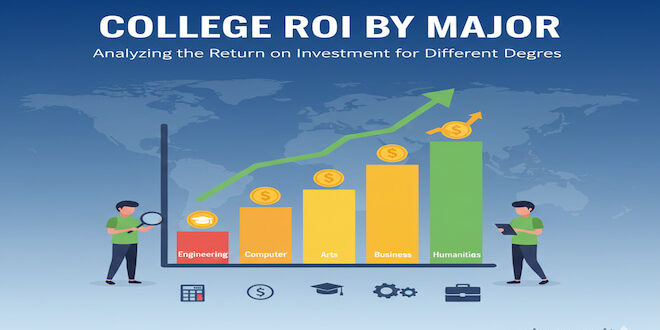
For many students and parents, choosing a college major is no longer just an academic decision. It’s also a financial one. Tuition has risen steadily in many countries, student debt has become a long-term burden for some graduates, and job markets continue to change faster than degree programs. As a result, one question keeps coming up: Which college majors offer the best return on investment?
This is where the idea of college ROI by major becomes useful.
Return on investment, or ROI, is not about chasing the highest salary at all costs. Instead, it’s about understanding how different majors compare in terms of cost, risk, opportunity, and long-term value. A degree that looks impressive on paper may not always deliver strong outcomes, while a less glamorous major may quietly produce consistent and reliable results.
This article explains how to evaluate college ROI by major in a practical, realistic way. It avoids rankings hype and focuses on what actually matters for students and families trying to make informed decisions.
What Does College ROI Really Mean?
In simple terms, college ROI compares what you put into a degree with what you get out over time.
The investment side usually includes:
- Tuition and fees
- Living expenses
- Books and materials
- Time spent studying instead of earning full-time income
- Interest on student loans
The return side includes:
- Employment probability
- Starting salary and long-term earnings
- Career stability
- Advancement opportunities
- Flexibility to change industries
Unlike financial investments, education returns are not guaranteed. Outcomes vary widely depending on the student, the institution, the economy, and personal choices after graduation.
Because of this, ROI should be used as a decision-making tool, not a prediction machine.
Why ROI Varies So Much by Major
Not all majors are connected to the labor market in the same way.
Some majors are closely aligned with specific jobs. Others focus on broader skills that can be applied in many fields. Some lead to regulated professions, while others leave career direction more open.
ROI differs by major because of:
- Employer demand
- Skill specificity
- Licensing requirements
- Geographic concentration of jobs
- Typical need for graduate study
Understanding these differences helps explain why some majors consistently show stronger financial outcomes than others.
The Cost Side of College ROI
Before comparing returns, it’s essential to understand costs clearly.
Tuition Differences by Major
Certain majors cost more to deliver. Engineering, healthcare, and laboratory-based programs often charge higher tuition due to equipment, facilities, and staffing needs.
However, higher tuition does not automatically mean lower ROI. In some cases, higher costs are offset by stronger earnings after graduation.
Time to Degree
Time matters. A major that takes longer to complete increases total cost and delays entry into the workforce.
Extended study periods can reduce ROI, especially if additional years do not significantly improve job prospects.
Student Debt and Interest
Debt amplifies cost. Two students with the same degree can experience very different ROI outcomes depending on how much they borrow and on what terms.
Lower debt often improves ROI more than higher income does.
The Return Side of College ROI
Returns from a degree are best measured over time, not just at graduation.
Starting Salary vs Career Growth
Some majors offer high starting salaries that grow slowly. Others start modestly but improve steadily.
A major with slower early earnings can still deliver strong ROI if long-term growth is solid and employment is stable.
Employment Stability
Consistent employment is a key part of ROI.
Majors linked to industries with steady demand tend to protect graduates from prolonged unemployment. Even short gaps in employment can significantly reduce lifetime earnings.
Career Flexibility
Flexibility is an underrated ROI factor.
Majors that build transferable skills allow graduates to adapt when industries change. This adaptability can protect ROI during economic downturns.
High-ROI Majors: Consistent Performers
While individual outcomes vary, some majors consistently show strong ROI patterns across regions and economic cycles.
Engineering
Engineering majors are often associated with high ROI.
Key reasons include:
- Strong demand across industries
- Clear skill-to-job alignment
- Competitive starting salaries
- International job mobility
Fields such as electrical, mechanical, civil, and industrial engineering tend to offer reliable outcomes. Software-related engineering often performs even better, though competition can be intense.
Engineering programs are demanding, however. Students who struggle academically may face delayed graduation, which can hurt ROI.
Computer Science and Information Technology
Computer science and IT majors continue to show strong ROI due to digital transformation across sectors.
Graduates often benefit from:
- High demand for technical skills
- Above-average starting salaries
- Opportunities for remote or freelance work
- Rapid job market entry
That said, technology changes quickly. Graduates must keep learning to maintain their market value.
Healthcare and Allied Health
Healthcare majors often deliver solid ROI over time.
Nursing, medical laboratory science, and allied health fields tend to offer:
- Stable employment
- Clear professional pathways
- Predictable income growth
Training can be intensive, and licensing requirements apply. Still, long-term outcomes are often reliable.
Finance, Accounting, and Analytics
Business-related majors show mixed ROI overall, but certain specializations stand out.
Finance, accounting, and business analytics often lead to strong outcomes when paired with internships or certifications.
Without practical experience, however, business majors may struggle in competitive job markets.
Medium-ROI Majors: Strategy Matters
Some majors have moderate average ROI but can perform very well with the right approach.
Economics and Statistics
Economics and statistics majors often develop strong analytical skills.
When combined with programming, data analysis tools, or industry experience, these majors can lead to roles in consulting, finance, policy, or technology.
Without applied skills, early career outcomes may be slower.
Architecture and Design
Architecture and design majors often require long training periods and face competitive job markets.
ROI improves significantly when students:
- Build strong portfolios
- Complete internships
- Are open to relocation
Early earnings may be modest, but long-term potential exists.
Education
Education majors often show lower financial ROI compared to technical fields.
However, they frequently offer:
- Stable employment
- Predictable career paths
- Strong social impact
In regions with teacher shortages, ROI can be higher than national averages suggest.
Lower Average ROI Majors: Context Is Key
Arts, humanities, and some social science majors often show lower average financial ROI. However, averages can be misleading.
Arts and Humanities
Majors such as history, literature, philosophy, and fine arts tend to have:
- Lower starting salaries
- Less direct job pipelines
At the same time, they develop strong communication, writing, and critical thinking skills.
Graduates who combine these majors with:
- Internships
- Technical or digital skills
- Graduate study
- Professional certifications
Can achieve strong long-term outcomes.
Social Sciences
Majors like sociology, anthropology, and political science often require additional education for specialized roles.
ROI improves when students plan ahead and align coursework with practical applications.
The Role of Graduate Education in ROI
For some majors, undergraduate ROI is incomplete without graduate study.
Fields such as psychology, biology, and law-related tracks often require further education to unlock full earning potential.
Students choosing these majors should evaluate:
- Total time to employment
- Additional costs
- Likely returns after graduate school
Ignoring this step can lead to unrealistic expectations.
How Geography Affects College ROI by Major
Location matters more than many families realize.
Factors include:
- Local job markets
- Salary levels
- Cost of living
- Licensing rules
A major with strong ROI in one region may perform differently elsewhere. For example, technology majors often benefit from proximity to tech hubs, while healthcare outcomes vary less by location.
The Impact of Internships and Work Experience
Across nearly all majors, experience improves ROI.
Students who graduate with:
- Internships
- Cooperative education placements
- Relevant part-time work
Consistently achieve better outcomes than those without experience, even within the same major.
Experience reduces risk and shortens the transition from school to work.
Common Mistakes When Evaluating College ROI by Major
Several mistakes distort decision-making.
These include:
- Focusing only on salary rankings
- Ignoring debt levels
- Assuming prestige guarantees outcomes
- Overlooking personal fit
- Underestimating the importance of experience
Avoiding these mistakes often matters more than choosing the “right” major.
A Practical Framework for Comparing Majors
Instead of asking which major has the highest ROI, consider these questions:
- What is the total cost of this major?
- What are realistic job outcomes?
- How stable is demand in this field?
- How flexible is the career path?
- How well does this major match my strengths?
Writing down answers makes trade-offs clearer.
ROI Is Personal, Not Universal
A major with excellent average ROI may be a poor choice for a particular student.
Interest, ability, motivation, and persistence strongly influence outcomes. Students who engage deeply with their field often outperform averages.
ROI should inform decisions, not replace judgment.
Long-Term Perspective Matters
College ROI unfolds over decades.
Industries evolve. New roles emerge. Skills that seem niche today may become valuable tomorrow.
Majors that emphasize adaptability, problem-solving, and continuous learning often age better over time.
Final Thoughts
College ROI by major is a useful lens for evaluating degree choices, but it should be used thoughtfully.
By understanding costs, comparing realistic returns, and considering personal fit, students and parents can move beyond headlines and make balanced decisions.
The best major is not simply the one with the highest average salary. It is the one that offers sustainable value, manageable risk, and a path that aligns with both the job market and the student’s strengths.
That combination—not hype—is what leads to strong outcomes over the long run.
