 UniReco Helping You Choose the Right Campus for Your Future
Related Articles


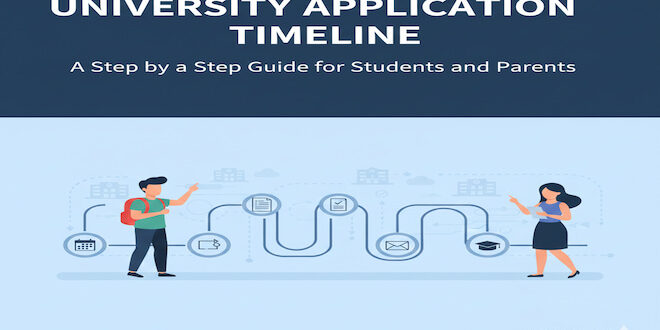
A Step-by-Step Guide for Students and Parents

Applying to university is not a single task. It is a process that unfolds over many months—and sometimes years. Yet one of the most common reasons students feel overwhelmed is not lack of ability, but poor timing. Deadlines sneak up. Documents pile up. Decisions feel rushed.
That’s why understanding the university application timeline is so important.
This article breaks down the entire process in a clear, logical way, from early preparation to final enrollment. It is written for students and parents who want to plan ahead, reduce stress, and make informed decisions—without relying on guesswork or last-minute panic.
Rather than focusing on specific countries or institutions, this guide explains the typical timeline most universities follow, with notes on where variations may occur.
Why the University Application Timeline Matters
Many students assume that university applications happen in the final year of high school. In reality, strong applications are usually the result of preparation that starts much earlier.
A clear timeline helps students:
- Avoid missed deadlines
- Improve application quality
- Make better academic and financial choices
- Reduce stress and uncertainty
For parents, a timeline provides clarity about when support, decisions, and financial planning are needed.
Most importantly, planning ahead gives students options. Without a timeline, choices often become limited.
Understanding the Big Picture
Before diving into specific months, it helps to understand the overall structure of the application journey.
In most systems, the process includes:
- Exploration and self-assessment
- Program and university research
- Academic and extracurricular preparation
- Standardized testing (if required)
- Application submission
- Offers, decisions, and enrollment
These stages overlap. Therefore, the timeline is not linear, but layered.
Early Preparation: 18–24 Months Before Enrollment
This phase is often overlooked, yet it shapes everything that follows.
Self-Assessment and Goal Setting
At this stage, students should focus on understanding themselves rather than choosing universities.
Key questions include:
- What subjects do I enjoy and perform well in?
- What learning environments suit me?
- Do I prefer theoretical or practical study?
- What are my long-term academic or career goals?
Clear answers are not required yet. However, early reflection helps narrow options later.
Understanding Academic Requirements
Different programs have different prerequisites.
Students should begin checking:
- Required high school subjects
- Minimum grade expectations
- Language requirements
- Portfolio or audition needs (if applicable)
Knowing these early allows students to adjust course selections in time.
Building a Strong Academic Foundation
Grades from earlier years often count. Even when they do not, they influence preparedness.
Consistent performance matters more than last-minute improvement. Therefore, habits developed during this phase have long-term impact.
Research Phase: 12–18 Months Before Enrollment
This is when the application process becomes more concrete.
Researching Programs First, Universities Second
A common mistake is choosing universities based on reputation alone.
Instead, students should:
- Identify programs that match their interests
- Compare curricula and learning outcomes
- Understand teaching styles and assessment methods
Once programs are clear, suitable universities become easier to identify.
Creating a Longlist and Shortlist
At this stage, it helps to organize choices.
A typical structure:
- Longlist: all potentially suitable programs
- Shortlist: realistic options based on grades, cost, and fit
This approach prevents emotional attachment to a single option too early.
Understanding Costs and Financial Planning
Costs should be researched early, not after acceptance.
Families should begin estimating:
- Tuition fees
- Living expenses
- Application costs
- Testing and document fees
This is also the time to explore scholarships and financial aid timelines.
Testing and Documentation: 9–15 Months Before Enrollment
Many applications depend on standardized tests or formal documents.
Standardized Tests (If Required)
Depending on the system, tests may include:
- Academic aptitude tests
- Subject-specific exams
- Language proficiency tests
Because scores can take time to improve, early testing allows room for retakes.
Preparing Academic Documents
Students should begin gathering:
- Official transcripts
- Predicted grades (if applicable)
- School reports
Requesting documents early avoids last-minute delays.
Identifying Recommenders
Recommendation letters are often required.
Students should:
- Choose teachers or counselors who know them well
- Ask early and provide clear timelines
- Share relevant background and goals
Strong letters require time and thoughtful input.
Application Preparation: 6–12 Months Before Enrollment
This is the most intensive phase of the timeline.
Writing Personal Statements and Essays
Essays often carry significant weight.
Effective essays:
- Explain motivation clearly
- Show fit with the program
- Use specific experiences
- Avoid clichés and exaggeration
Because good writing takes revision, starting early is essential.
Finalizing the University List
At this point, students should confirm:
- Entry requirements
- Application deadlines
- Required documents
- Submission platforms
Applications are usually divided into:
- Reach options
- Match options
- Safer options
Balance matters.
Tracking Deadlines Carefully
Universities may have different deadlines for:
- Early applications
- Regular applications
- Scholarships
- Housing
A shared calendar helps both students and parents stay aligned.
Application Submission: 3–6 Months Before Enrollment
This phase is about execution.
Submitting Applications
Before submission, students should:
- Review all sections carefully
- Confirm document uploads
- Check formatting and naming conventions
Small errors can cause unnecessary complications.
Paying Fees and Confirming Receipt
Most systems provide confirmation emails or portals.
Students should save:
- Payment receipts
- Submission confirmations
- Login details
Organization at this stage prevents confusion later.
Waiting Period: After Submission
Once applications are submitted, the waiting begins.
Responding to Additional Requests
Some universities may request:
- Additional documents
- Interviews
- Clarifications
Quick, polite responses matter.
Continuing Academic Performance
Final grades still matter.
Offers can be conditional, meaning students must maintain certain standards.
Dropping focus too early is a common mistake.
Offers and Decision-Making: 1–3 Months Before Enrollment
This is where planning pays off.
Understanding Different Types of Offers
Offers may be:
- Unconditional
- Conditional
- Waitlist-based
Each requires a different response strategy.
Comparing Offers Carefully
When comparing options, students should look beyond acceptance alone.
Consider:
- Total cost
- Program structure
- Support services
- Location and lifestyle
- Career outcomes
Writing comparisons down helps clarify priorities.
Discussing Decisions as a Family
Parents often focus on financial and long-term considerations, while students focus on fit and interest.
Open discussion helps balance both perspectives.
Acceptance and Enrollment
Once a decision is made, the final steps begin.
Accepting the Offer
Universities usually require:
- Formal acceptance
- Deposit payment
- Deadline confirmation
Missing this step can result in losing the place.
Housing and Logistics
After acceptance, students should arrange:
- Accommodation
- Health insurance
- Travel (if applicable)
- Orientation registration
Some options fill quickly, so early action helps.
After Acceptance: Preparing for Transition
The timeline does not end with acceptance.
Academic Preparation
Students may need to:
- Review foundational subjects
- Complete placement tests
- Attend pre-course modules
Preparation improves confidence.
Practical Readiness
Life skills matter.
This includes budgeting, time management, and understanding support services.
A smooth transition supports academic success.
Common Timeline Mistakes to Avoid
Several mistakes recur each year.
These include:
- Starting research too late
- Underestimating preparation time
- Missing scholarship deadlines
- Applying without backup options
- Ignoring documentation requirements
Awareness helps prevent them.
How Parents Can Support the Timeline
Parents play an important role, especially in planning and organization.
Helpful support includes:
- Keeping track of deadlines
- Discussing financial planning early
- Encouraging realistic choices
- Providing emotional balance during stress
Support works best when it guides, not controls.
A Simple Timeline Summary
While details vary, a simplified version looks like this:
- 18–24 months before: self-assessment and preparation
- 12–18 months before: research and shortlisting
- 9–15 months before: testing and documents
- 6–12 months before: applications and essays
- 3–6 months before: submission and follow-up
- 1–3 months before: decisions and enrollment
Flexibility is important, but structure reduces pressure.
Final Thoughts
The university application timeline is not about rushing ahead. It is about moving deliberately, with enough time to think, compare, and decide.
Students who understand the timeline gain control over the process. Parents who understand it can offer better support. Together, they can replace uncertainty with clarity.
When planning starts early and decisions are informed, the university application process becomes manageable—and far less stressful.
